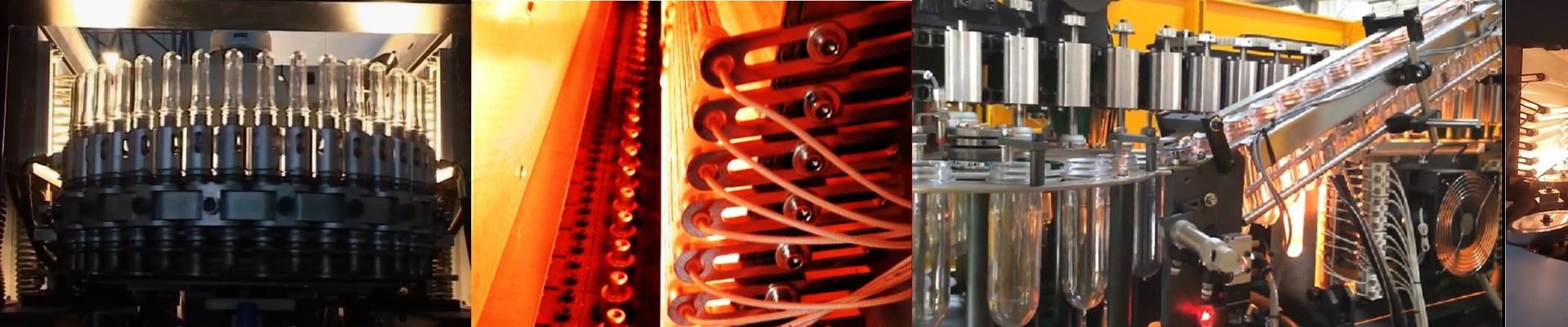
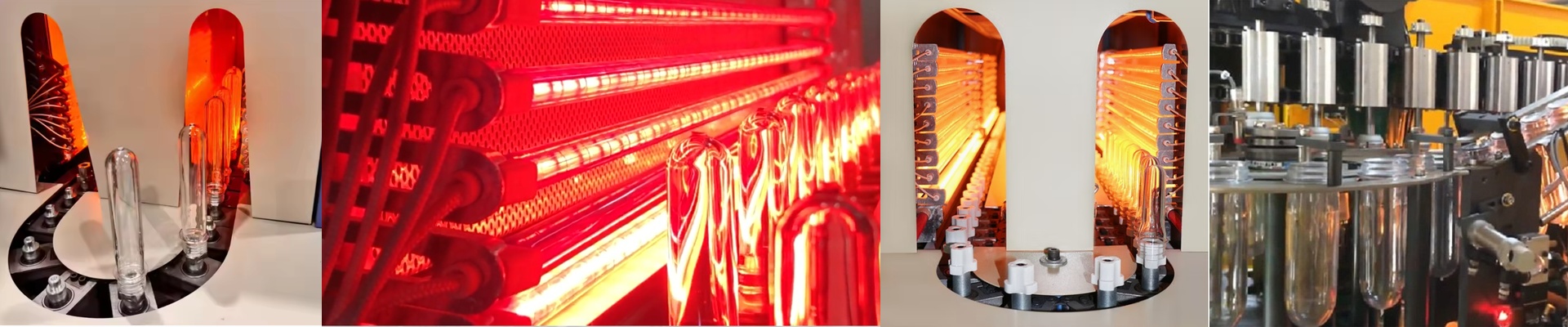
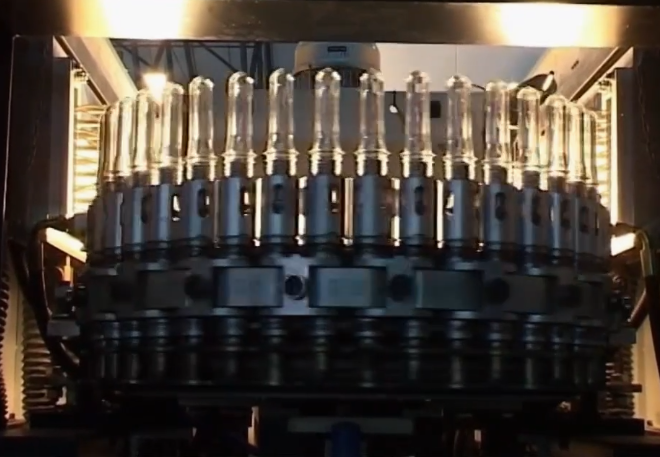
Every shift, you’re staring at the heating tunnel, because if the preforms don’t come out with the right temperature profile, you’re drowning in scrap, fighting slow cycles, and scrambling just to keep the line moving. When the heaters fail unexpectedly, you don’t just lose minutes. You lose resin, steam, and the overtime it takes to dig out. So here’s the question that matters: how much downtime and maintenance spend are you carrying because your heating element can’t keep up with the machine, the process, and the demand?
What matters under the hood
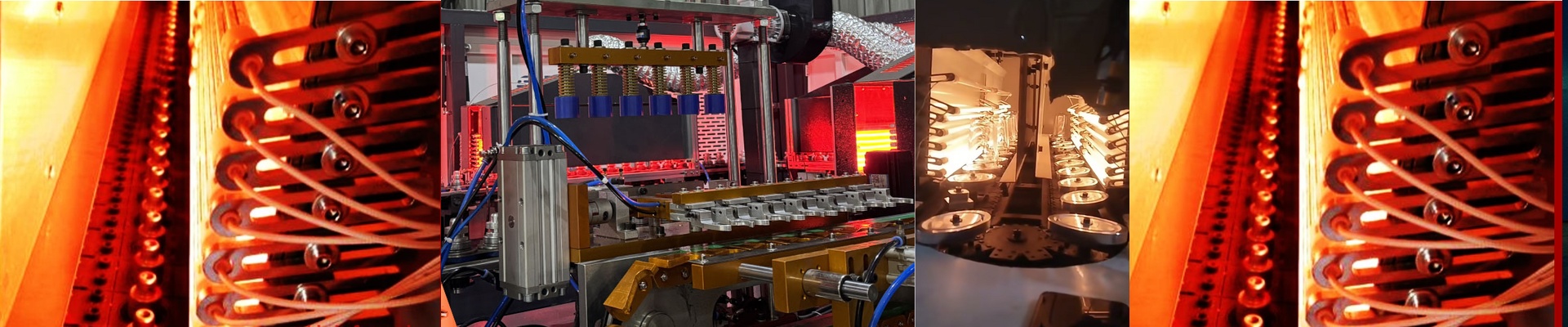
We build infrared heating elements for blow molders as direct-fit pieces, designed around the realities of preform heating: fast response, stable output, and repeatable performance. You can spec halogen quartz emitters or short-wave infrared lamps, with watt densities matched to each heating zone, rated for 240V/480V systems and standard R7s connectors. The quartz envelope takes the thermal shock of high-cycle running, and the internal filament layout keeps the energy focused where the preform needs it. The payoff is tighter temperature control across the tunnel.
Why this matters on your machine
On Sidel, Krones, SIPA, Husky, SACMI, and Nissei ASB blow molders, the heating element sets the pace. When it’s doing its job, the machine can run at design speed without chasing temperature drift. You get quicker warm-ups, fewer temperature-related rejects, and more consistent bottle wall thickness. Over a year, that shows up as higher uptime, lower scrap, and measurable energy savings—especially when the element holds output without forcing the zone to overdrive.
The practical details
Installation is straightforward, but the details bite you if you skip them. Confirm the machine’s voltage, wattage, length, and connector type, and match the element to each heating zone—mismatched watt density will throw off the profile. There is a trade-off to own: higher output density shortens warm-up time, but it demands cleaner reflectors and stable airflow to avoid hot spots. Plan replacements during scheduled maintenance, and keep spares on hand so an unplanned stop doesn’t turn into a long one.