
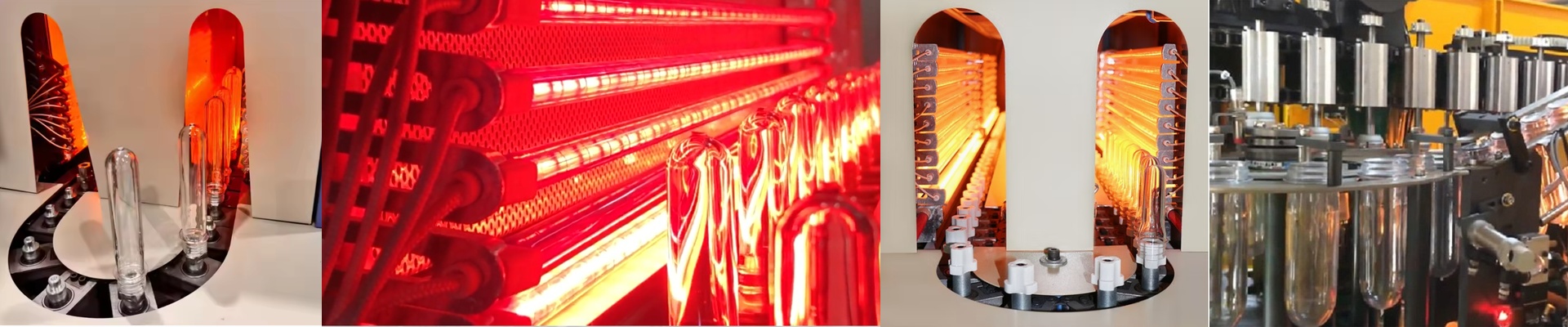
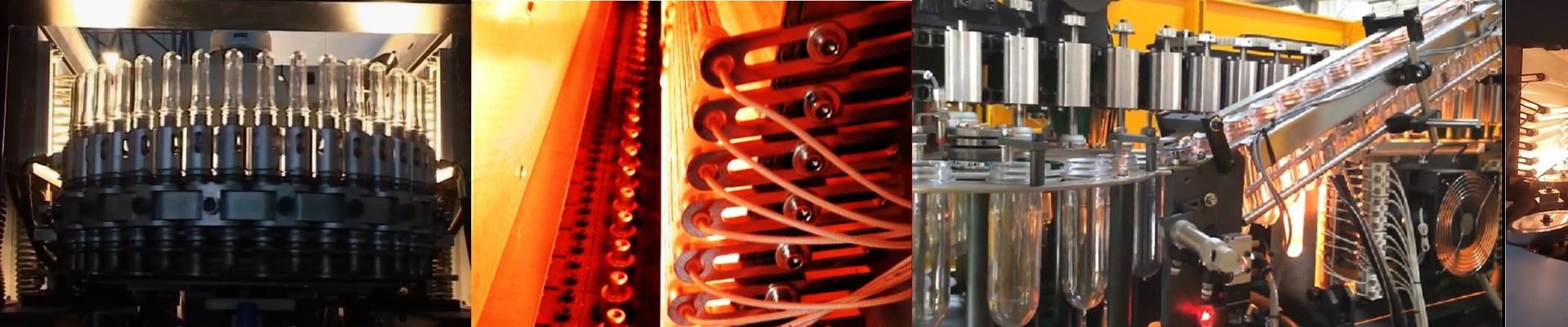
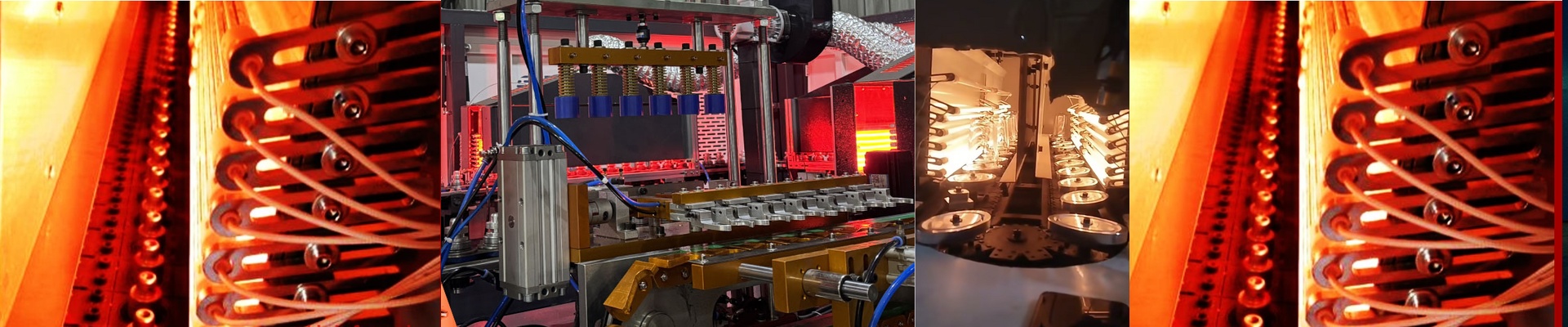

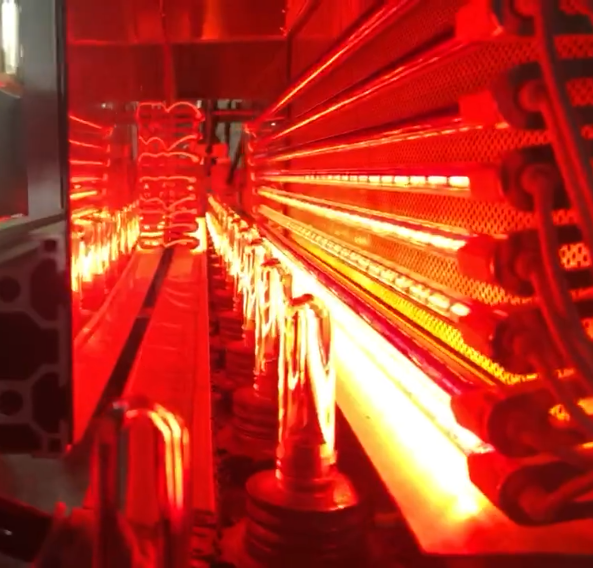
When the heating tunnel starts to miss, you feel it immediately—preforms that won’t take the stretch, wall thickness all over the place, and a blow molder that spends more time chasing rejects than running full cycles. In stretch blow molding, the oven heater isn’t just warming PET. It’s setting the thermal profile that makes the parison behave the same way, every time. If your heaters are drifting, cycling too slow, or dying early, the plant pays for it in scrap and downtime. What matters, technically We build oven heaters around short-wave infrared quartz emitters because they respond fast and keep control tight during preform heating. Each element is matched to standard blow molder voltages and watt densities, so the heat input stays repeatable across the zones. The emitters use R7s connectors and a compact geometry that drops into OEM heating tunnels without reworking brackets or wiring looms. You can count on stable output over long runs—we’ve tracked units running 5,000+ hours with minimal lumen drop, so setpoints stay consistent shift after shift. On the blow molding line, time equals heat. Fast-ramp infrared heating shortens the heating window, so the machine gets back to stable production quicker after a changeover. Tighter temperature control across the preform body cuts out hot spots and cold bands, which means more uniform blow-up and consistent bottle quality. Energy use drops because the emitter puts heat right on the preform surface, with far less wasted convection. Fewer heater changes translate to fewer stoppages—and that adds up to more bottles per day. Infrared oven heaters are sensitive to geometry and reflector condition. Align them properly and keep the reflectors clean; if you don’t, the heat map shifts and the preforms heat unevenly. Before ordering, confirm your blow molder’s voltage, connector type, and tunnel length—retrofits are straightforward, but mismatched dimensions will turn a quick job into a weekend project. If your plant runs high humidity or heavy wash-down cycles, spec the right housing and sealing; it keeps premature terminal failures off the floor.